FACS 243 - Digital Drafting I
The interior design industry is a fast-paced, demanding vocation. Clients desire to see a visual plan of a proposed project. Digital drafting skills give the student the ability to quickly satisfy the demand of a professionally drafted plan. Digital plans can also be quickly modified, which is essential in redesigning the interiors.
Project Description:
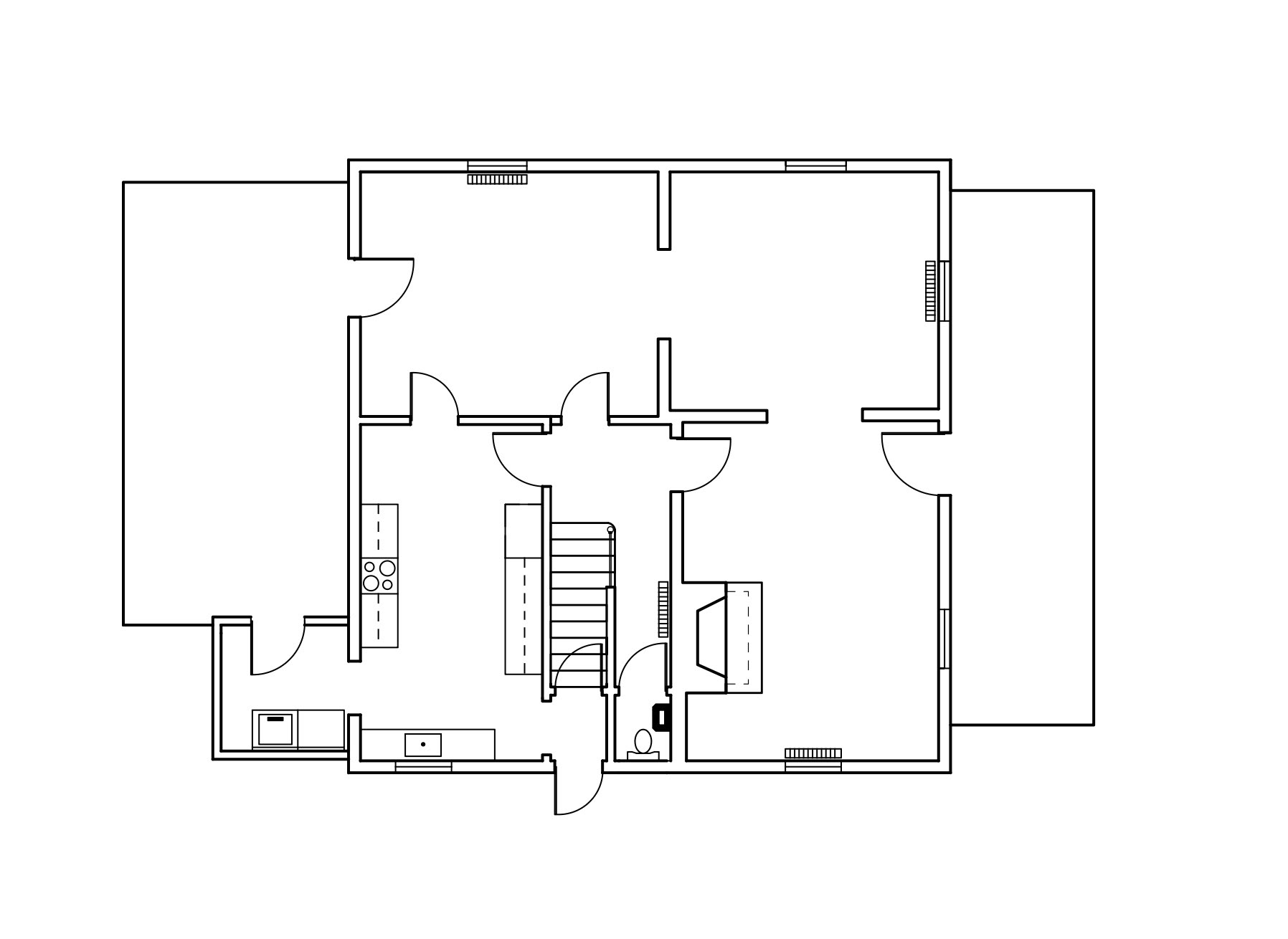
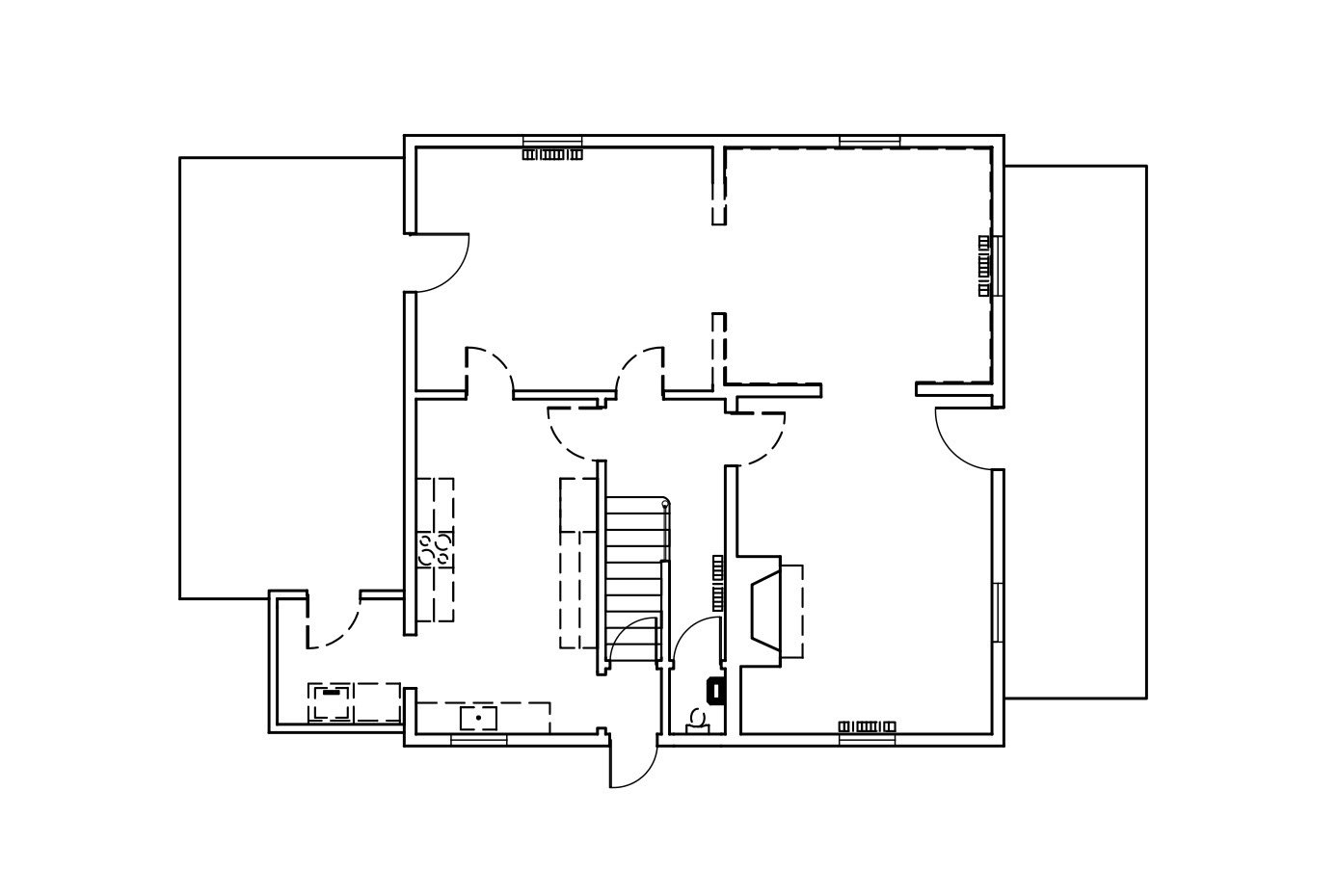
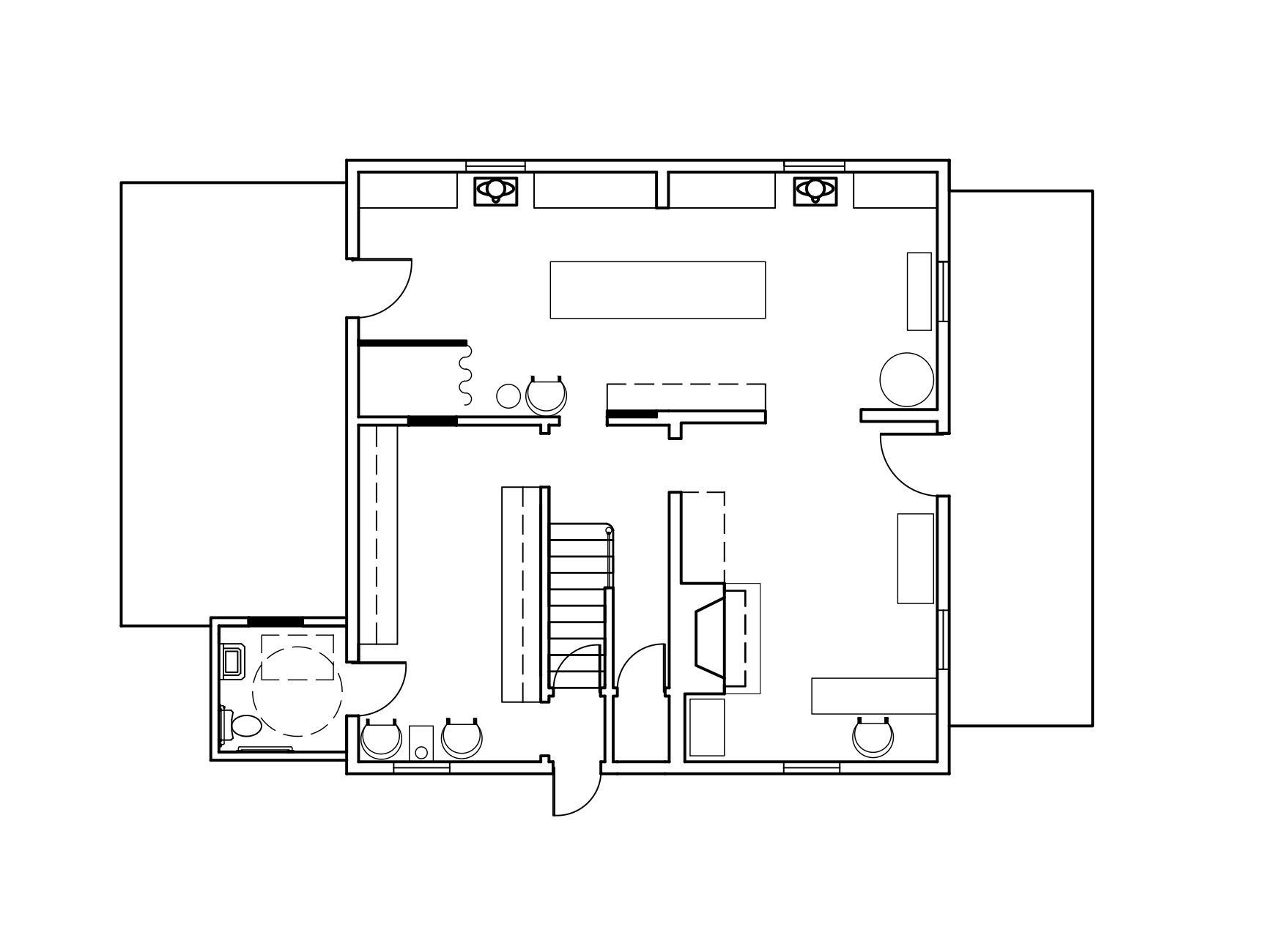
The Hawthorne House, originally constructed in 1932, is a distinctive example of the American Four-Square architectural style, featuring original hardwood flooring, a cozy den, and 10'-0" ceilings. Using a PDF floor plan provided in this course as a reference, I recreated the original layout in AutoCAD to establish a foundational base. From there, I developed a series of design modifications to transform the residential space into a functional and stylish ladies' clothing boutique. Key additions include an ADA-compliant restroom, a private changing room, and custom-designed product display areas tailored to enhance the retail experience.
Demolition Plan, Drawn in AutoCAD
Demolition Plan Description:
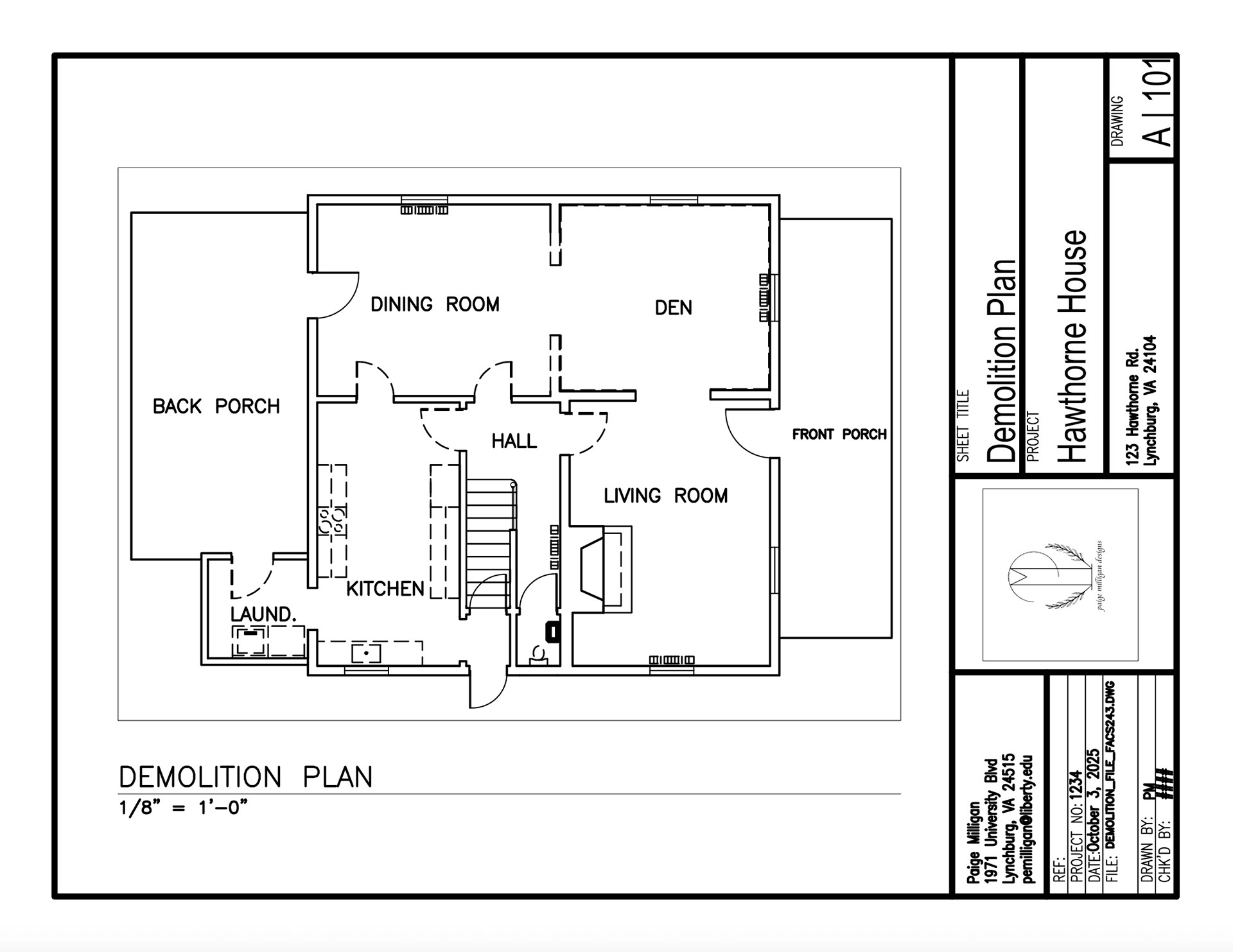
To facilitate the conversion of the Hawthorne House into a ladies' clothing boutique, selective interior demolition was undertaken. Residential features such as the kitchen were fully removed to better accommodate retail functions. The majority of interior doors and the wood paneling in the den were also eliminated to create a more open and intuitive flow throughout the space, enhancing customer circulation and visibility. Additionally, the original bathroom was repurposed as a storage area, and the former laundry room was converted into a new ADA-compliant restroom to meet accessibility requirements.
Construction Plan, Drawn in AutoCAD
Construction Plan Description:
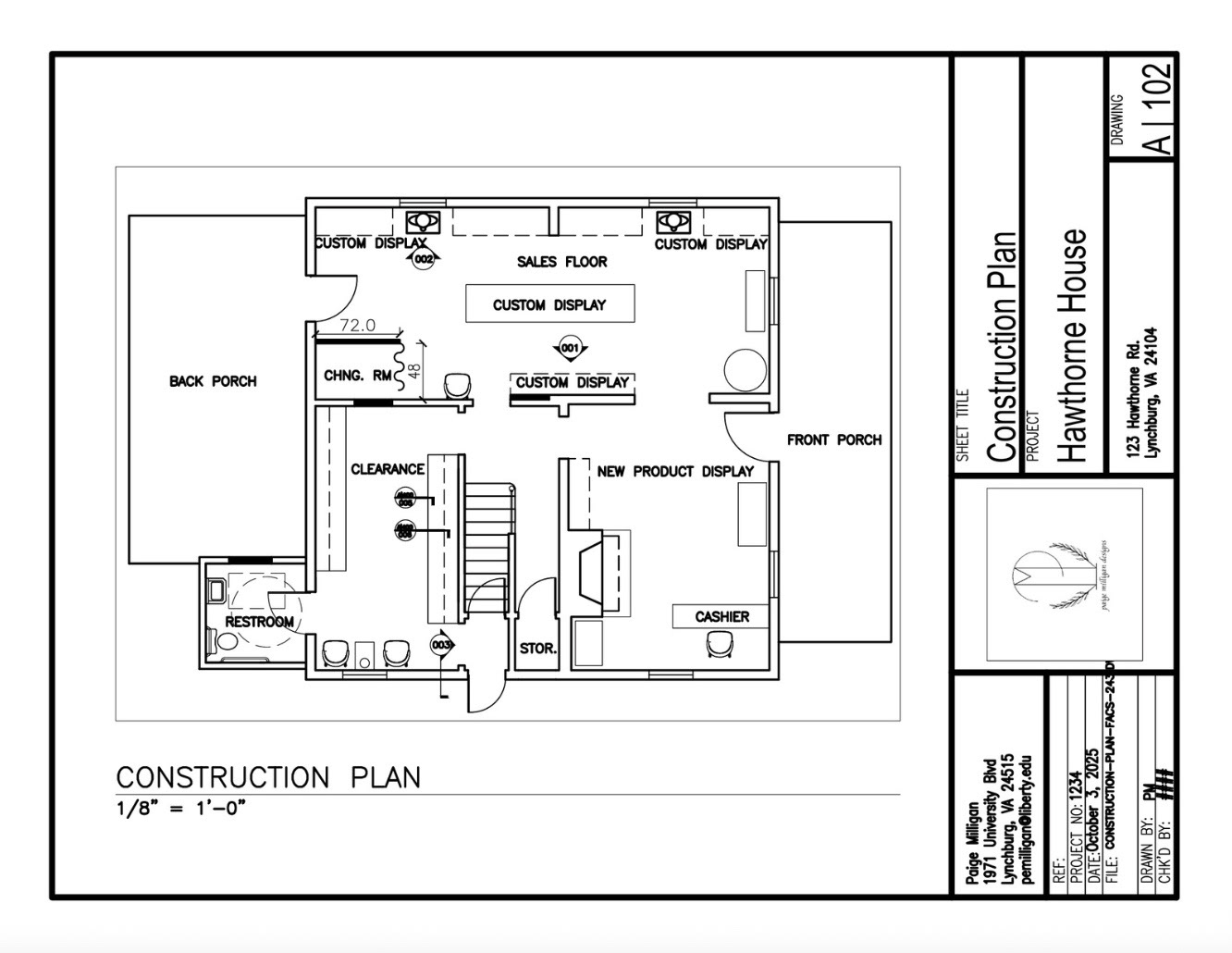
To accommodate the functional needs of the new ladies' boutique, several key modifications were incorporated into the construction plan. The former laundry room was redesigned to serve as an ADA-compliant restroom, ensuring accessibility for all patrons. A new changing room was added to enhance the customer experience, and multiple custom display fixtures were strategically integrated throughout the first floor to effectively showcase merchandise and guide circulation within the space.
Elevation, Drawn in AutoCAD
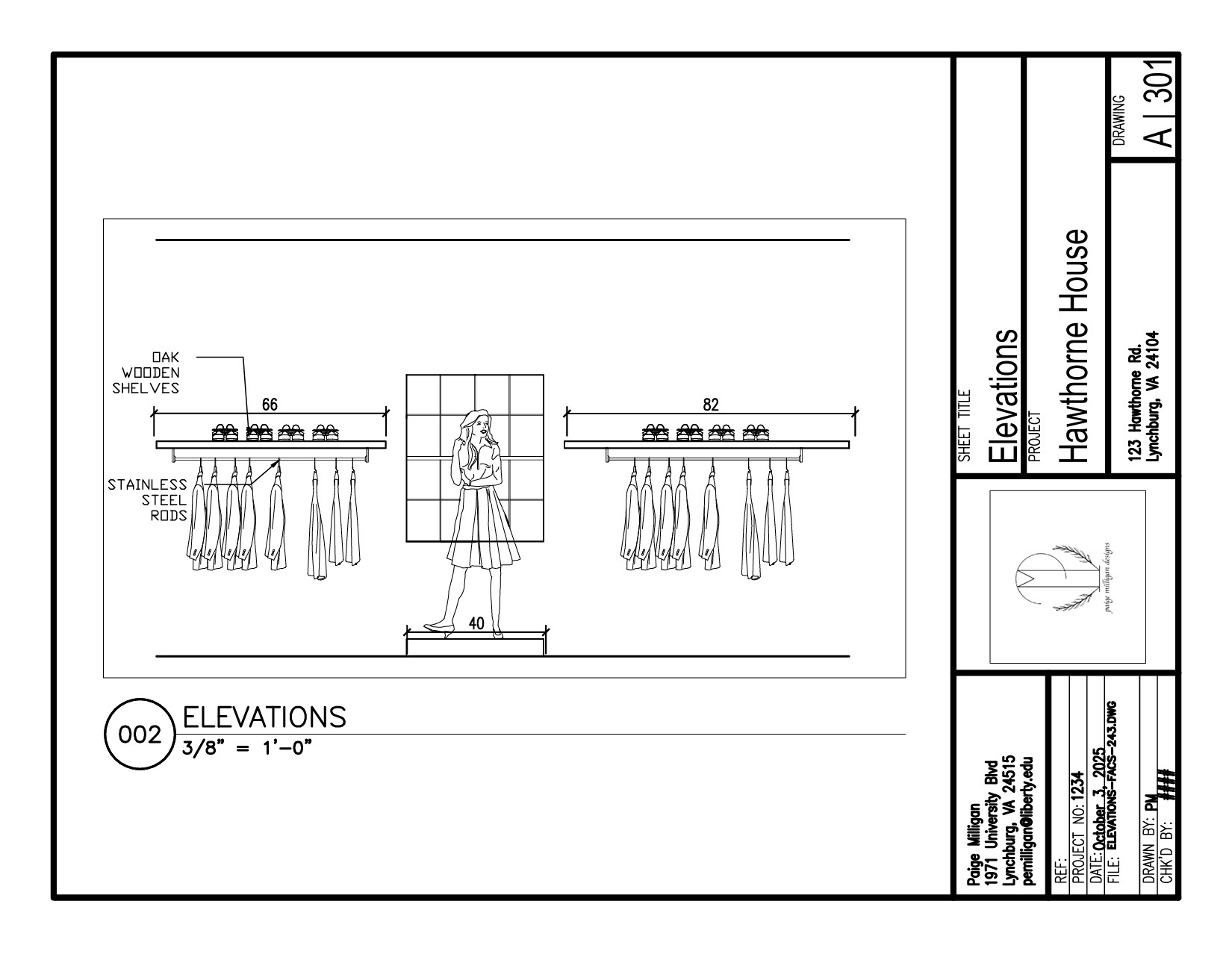
Elevation, Drawn in AutoCAD
Elevation Description:
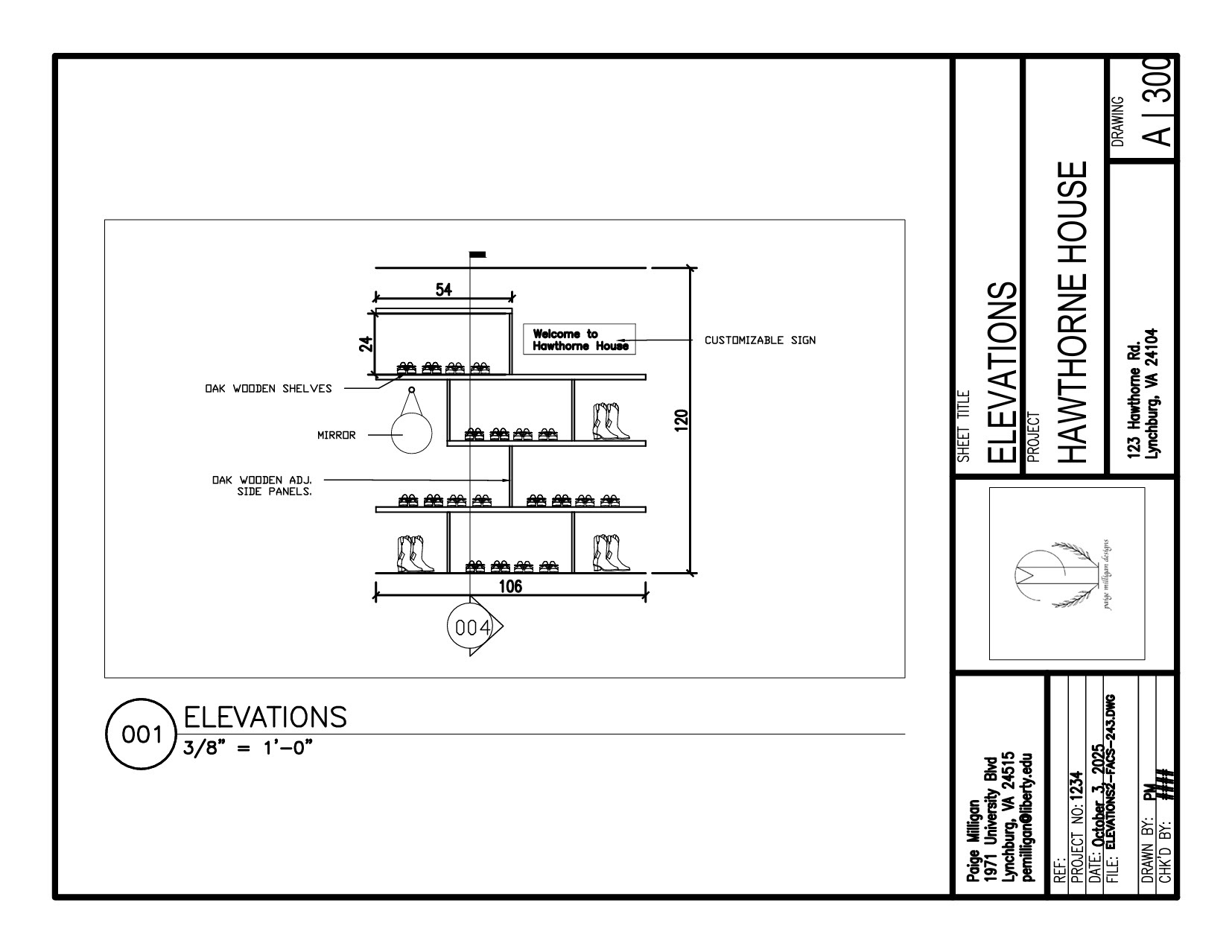
To clearly communicate the design vision for the transformation of the Hawthorne House into an upscale fashion boutique, I developed two detailed interior elevations focused on product display. These elevations were created to guide both the owner and contractor in understanding the aesthetic and functional goals of the space. The design emphasizes clean lines, simplicity, and a product-centered approach, reflecting the atmosphere of a high-end boutique. The first elevation is tailored for showcasing accessories such as shoes, jewelry, and handbags, while the second elevation is designed to display clothing in a visually appealing and organized manner.
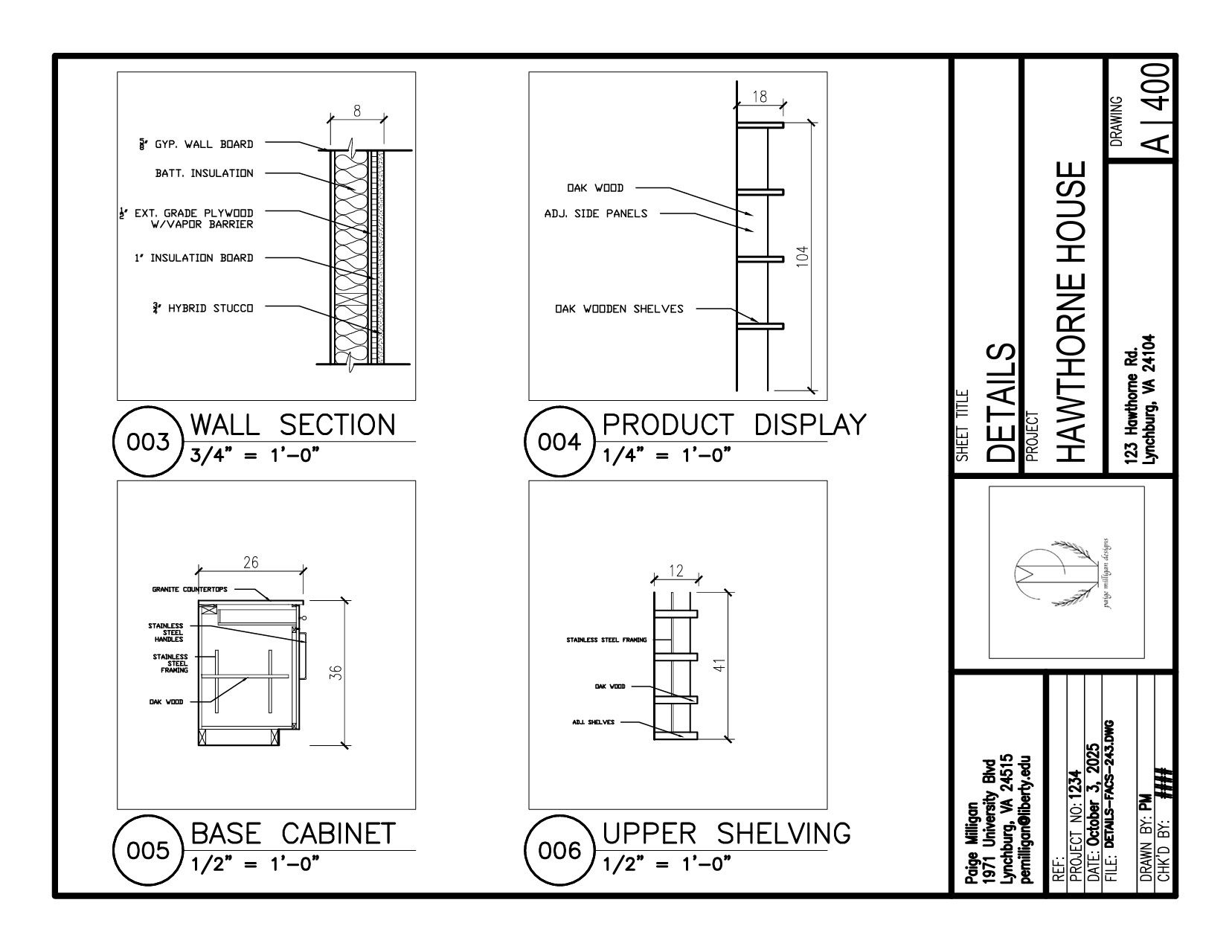
Details, Drawn in AutoCAD
Details Description
The cabinetry and wall details were developed to provide the contractor with a clear and comprehensive understanding of the design intent for the Hawthorne House boutique transformation. Presented above are three cabinetry details and one wall section, each drafted with precise line weights to convey materiality, depth, and construction hierarchy.
These detailed drawings serve not only as technical guides but also as visual reinforcements of the overall design language—highlighting craftsmanship, proportion, and the integration of functional elements.